
Poured footings for a deck addition last summer. Dug down to solid clay, set the forms, mixed the concrete. Heavy work but satisfying when done right.
What Footings Do
Footings spread the building load over a larger area so the soil can support it. Without adequate footings, structures settle unevenly. Cracks form. Doors stop closing. Eventually things get serious.
The heavier the structure and the weaker the soil, the bigger the footing needs to be. Basic physics – more area equals less pressure per square inch.
Common Types
Spread footings – Square or rectangular pads under individual columns or posts. What you’d use under deck posts or porch columns.
Strip footings – Continuous concrete under walls. The standard for residential foundations. Runs the full length of each wall.
Pile footings – Deep cylinders drilled into the ground. Used when surface soil is weak but solid rock or dense clay exists deeper down.
Sizing Matters
Local codes specify minimum sizes based on soil type and load. Typical residential strip footings are 16-24 inches wide and 8-12 inches thick. But your situation might differ.
Soil bearing capacity varies wildly. Rock can handle 12,000 pounds per square foot. Loose sand might only manage 2,000. A soil engineer’s report eliminates guessing for serious projects.
The Build Process
Dig below frost line. This depth varies by climate – check local requirements. Footings that freeze can heave and crack.
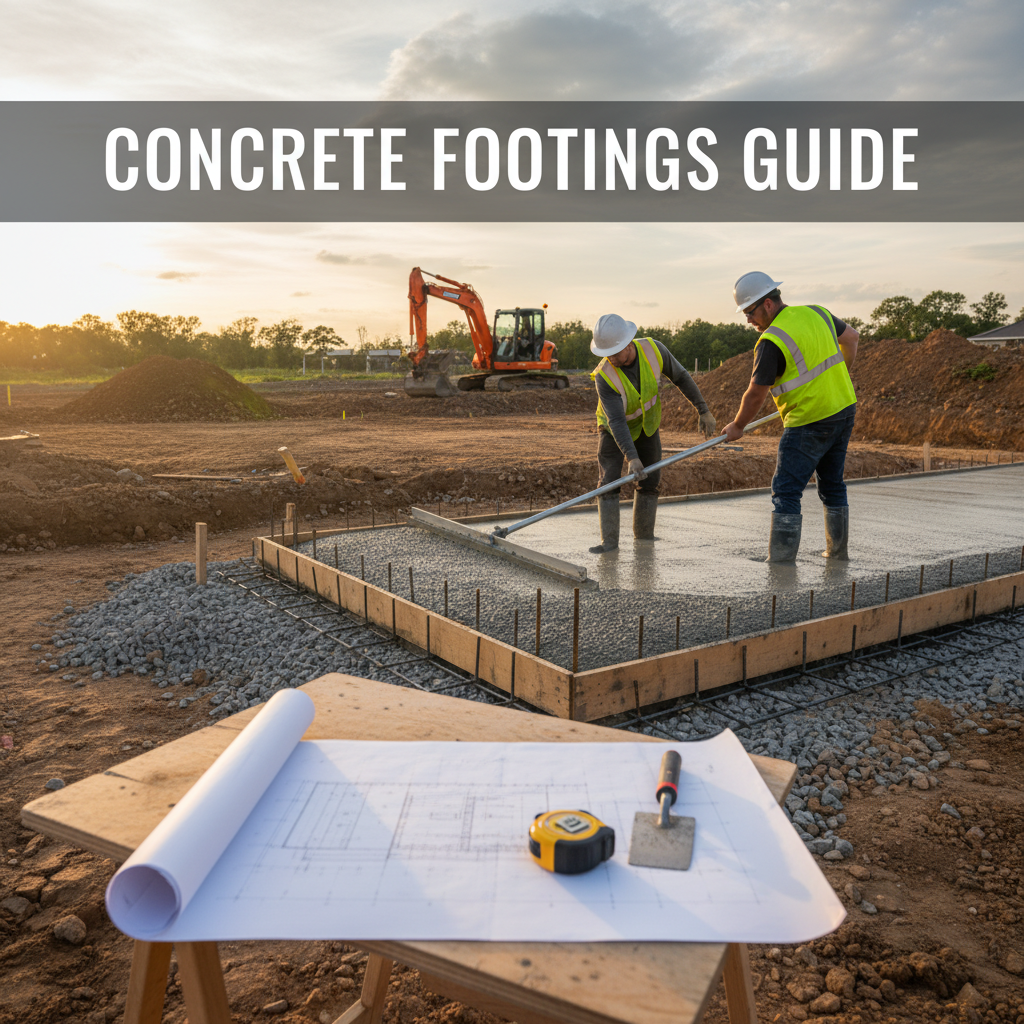
Build forms to contain the concrete. Wood boards work fine for most residential footings. Make sure they’re level and braced to resist concrete pressure.
Add rebar for tensile strength. Concrete handles compression well but needs steel to resist bending and cracking. Number four bar in a grid is typical for residential.
Pour, vibrate to remove air pockets, screed level. Then wait. Concrete needs time to cure properly.
Curing
Keep concrete moist for at least a week after pouring. Dry concrete is weak concrete. Cover with plastic or wet burlap in hot weather.
Full strength takes about 28 days. Don’t load footings heavily before that. Frame walls in a few days, but full building loads should wait.
Common Problems
Frost heave – Footings not deep enough freeze and lift. Everything above moves with them. Only solution is going deeper next time.
Settlement – Soil wasn’t compacted or assessed properly. Structure sinks unevenly. Expensive to fix after the fact.
Cracks – Some cracking is normal. Large cracks or displacement suggest something went wrong with design or construction.
DIY vs Hiring Out
Small footings for sheds or fences? Totally doable yourself if you’re comfortable with physical labor and following instructions.
House foundations? Get professionals. The stakes are too high and the inspection requirements too specific to wing it.
Final Thought
Everything else in a building sits on the footings. Get them right and you have a stable base for decades. Get them wrong and every problem compounds from there.



Stay in the loop
Get the latest updates delivered to your inbox.