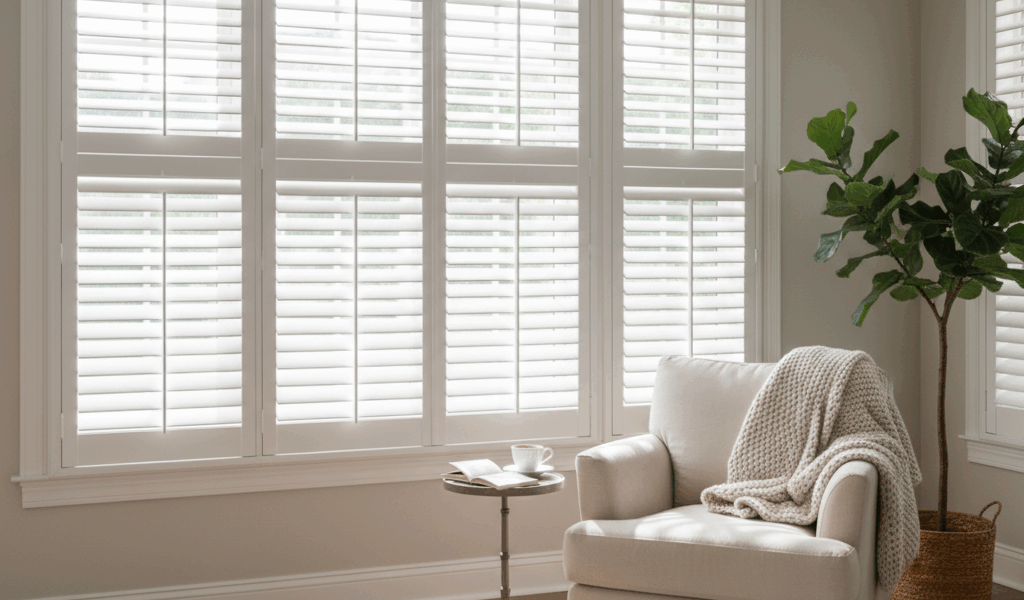
Installed plantation shutters in my dining room last year. Cost more than blinds. Worth every dollar. The room finally looked finished instead of temporary.
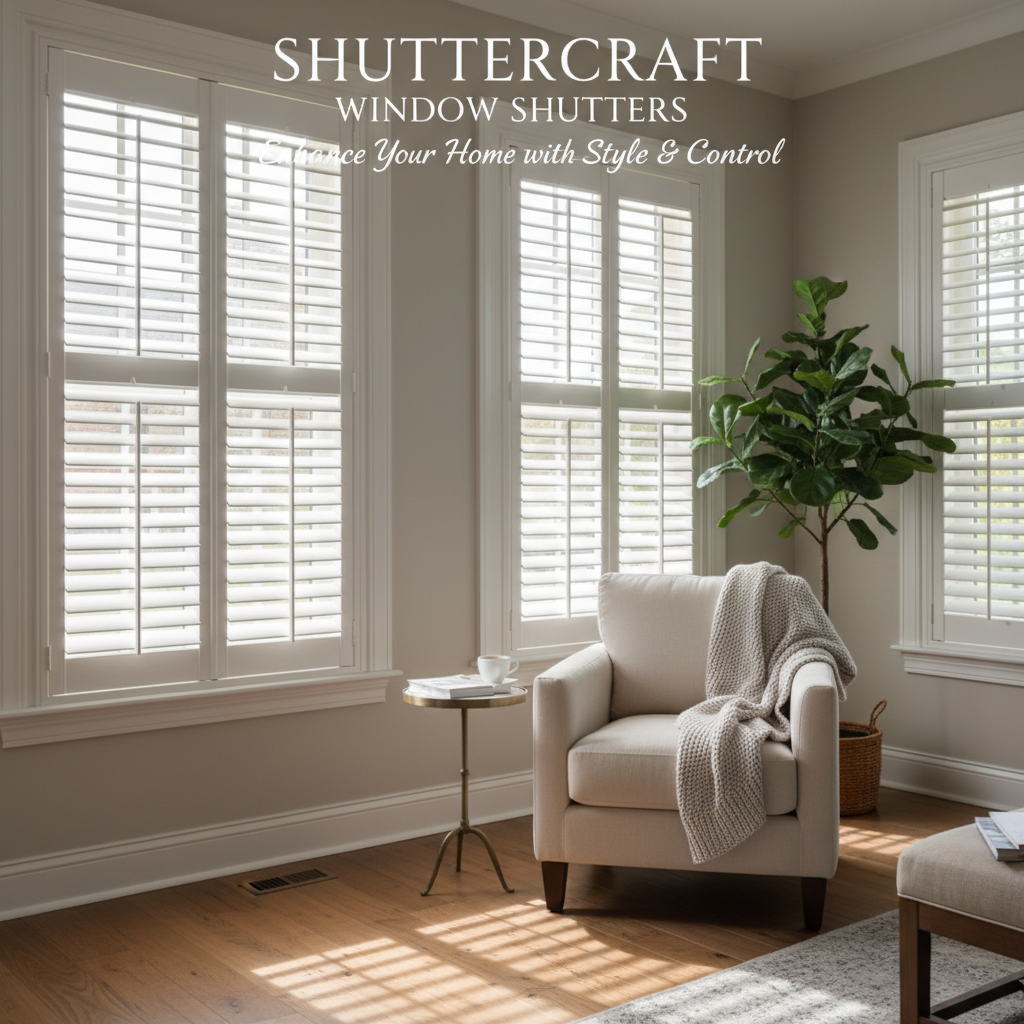
Why Shutters Work
Light control is the main thing. Tilt the louvers and you can dial in exactly how much sun you want. Not open or closed like blinds, but anywhere in between.
Privacy without darkness. You can block the view from outside while still letting light in. Curtains can’t do that. Blinds do it poorly.
They also insulate. Not massively, but enough to notice on cold windows. One more layer between you and the weather.
Shutter Styles
Full height – Cover the whole window. Most versatile option. Works in basically any room.
Cafe style – Just the bottom half. Light floods in above while you have privacy below. Great for kitchens and street-facing living rooms.
Tier on tier – Two separate panels, top and bottom, that operate independently. Best of both worlds, though more expensive.
Bay window shutters – Custom fitted to those tricky angles. Turns an awkward architectural feature into a highlight.
Material Options
Hardwood – Basswood usually. Looks best, lasts long, can be painted or stained. Not for wet locations.
MDF – Painted composite. Budget friendly, perfectly serviceable. Some people look down on it, but it works fine.
Waterproof – ABS plastic essentially. Bathroom and kitchen approved. Won’t warp, won’t rot, looks decent.
The Fitting Process
Someone comes to measure. This is critical – shutters are built to your window dimensions, not stock sizes. Get this wrong and you’re returning product.
Installation takes maybe an hour per window depending on complexity. Good installers make it look easy.
What to Consider
Louver size matters. Smaller louvers (2.5 inch) give a traditional look. Larger louvers (4 inch) feel more modern and let you see out better when open.
Frame style affects appearance. Inside mount looks sleek. Outside mount hides imperfect windows.
Color choice is usually white, off-white, or wood tones. Bold colors exist but rarely age well.
Maintenance
Dust them. That’s basically it. Feather duster or microfiber cloth every week or two. Deep clean maybe once a year with a damp cloth.
Compared to fabric window treatments that need washing or dry cleaning, shutters are low effort.
Worth the Investment
Shutters cost more upfront than blinds or curtains. But they last essentially forever, look better, and add value to the house. Twenty years from now they’ll still work and look good.
Not the cheapest option. But sometimes paying more means buying once instead of twice.


Stay in the loop
Get the latest updates delivered to your inbox.