Does Tung Oil Work on Metal? How to Apply It Right
Tung oil on metal is one of those topics that falls into a strange gap on the internet — woodworking sites ignore it, manufacturer pages pretend metal doesn’t exist, and most search results send you back to articles about finishing oak floors. I ran into this problem firsthand when I picked up a set of wrought iron garden fixtures at an estate sale and couldn’t find a single clear answer about whether tung oil would actually protect them. After a lot of trial and error — including one badly tacky application I had to strip off entirely — here’s what actually works.
Does Tung Oil Actually Work on Metal — The Short Answer
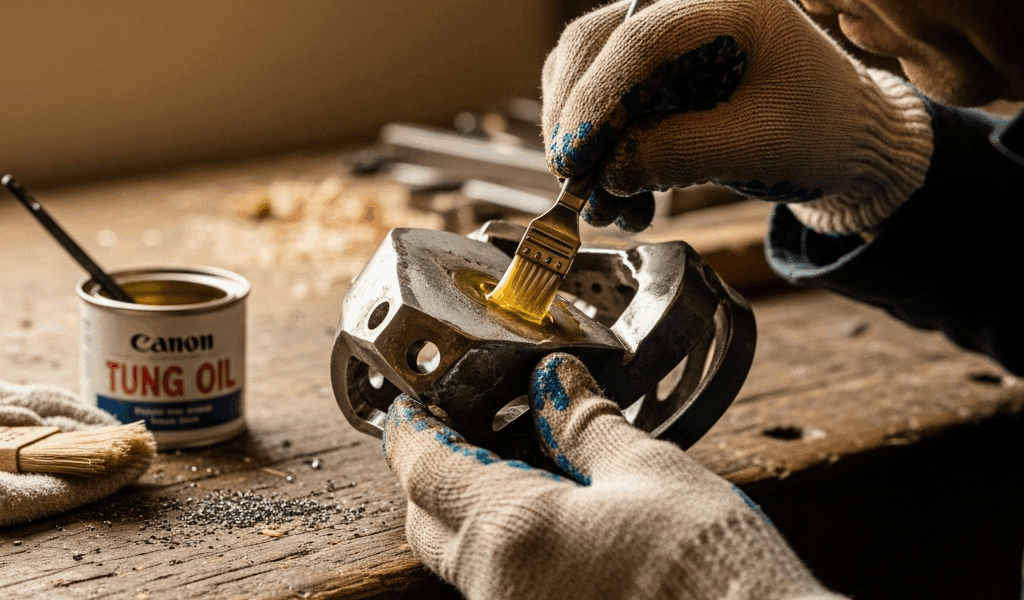
Yes. Tung oil works on iron and steel, but the mechanism is different from how it works on wood. On wood, tung oil penetrates the grain and polymerizes inside the material. On metal, there’s no grain to penetrate — tung oil forms a surface film that hardens through oxidative polymerization, bonding to the metal surface and creating a thin protective layer.
That layer does real work. It blocks moisture from reaching bare metal, which prevents rust on iron and steel and prevents tarnish on copper and brass. It also enhances the natural appearance of the metal rather than obscuring it — which is exactly what you want on a piece of wrought iron or a well-used cast iron skillet.
What tung oil does not do is replace paint, powder coat, or industrial primer. It’s a finishing treatment. A beautiful one, in the right context, but not a heavy-duty structural coating. Going in with the wrong expectations is where most people get frustrated.
Where Tung Oil Excels on Metal
Probably should have opened with this section, honestly — because the use cases are specific, and if yours isn’t on this list, a different product might serve you better.
Wrought Iron Decorative Items
This is the application that converted me. Wrought iron railings, garden furniture, and decorative fixtures respond beautifully to tung oil. The oil preserves the dark, natural appearance of the iron without adding a plasticky sheen. Two thin coats on a clean surface and the metal looks intentional — protected but not over-finished.
Garden Tools
Hand trowels, pruning shears, hoes — the metal heads on stored garden tools are rust magnets, especially over winter. A seasonal tung oil application prevents light surface rust without changing the look or feel of the tool. I treat my Fiskars Pro pruning shears (around $35 at most hardware stores) every fall before storage, and after three years the blades look nearly new.
Cast Iron Cookware
This one surprises people. Pure tung oil — and it has to be 100% pure, nothing blended — is food-safe when fully cured and works as a legitimate seasoning alternative for cast iron skillets and Dutch ovens. Full polymerization takes 7–14 days, but once cured, the finish is stable, non-toxic, and water-resistant. I’ve used it on a Lodge 10.25-inch skillet with good results.
Antique Hardware and Hinges
Old door hinges, cabinet hardware, decorative ironwork — tung oil preserves the aged patina while stopping active oxidation. It doesn’t strip the character the way aggressive rust removers do. For antique pieces where the surface story matters, this is the right call.
Copper and Brass Decorative Pieces
Tung oil prevents tarnishing on copper and brass while actually enhancing the warm, reddish-gold tones. One thin coat on a clean brass candlestick and the color deepens noticeably. Maintenance is simple — reapply once a year or when you notice the surface dulling.
Skip Tung Oil For
- Structural steel exposed to sustained heavy weather
- Engine components or anything with heat cycling above 200°F
- Surfaces that need a certified food-grade coating beyond cured oil
- Any metal where color or heavy impact protection is the goal
How to Apply Tung Oil to Metal — Step by Step
Surface preparation is 80% of this job. The mistake I made on my first attempt was skipping the acetone wipe-down because the metal “looked clean.” It wasn’t. Tung oil will not bond to oily metal — it just sits on top and stays tacky indefinitely. Learn from that.
Step 1 — Remove Rust and Old Coatings
Start with bare, clean metal. For light surface rust, 0000-grade steel wool removes it without scratching the underlying metal aggressively. For heavier rust, a wire brush or rust converter (like Rust-Oleum Rust Reformer) first, then steel wool to smooth. Old paint or lacquer needs to come off completely — tung oil applied over another coating isn’t adhering to metal, it’s adhering to that coating, which defeats the purpose.
Step 2 — Degrease with Acetone or Mineral Spirits
Wipe the entire surface with acetone or mineral spirits on a clean lint-free cloth. Acetone evaporates faster and leaves no residue — it’s the better choice for most metal applications. Let the surface dry completely before moving on. Five minutes is enough with acetone; mineral spirits need 15–20 minutes.
Step 3 — Apply the First Thin Coat
Thin is the rule. Use a clean lint-free cloth or a fine-bristle brush and apply a very thin coat, working the oil into any texture, crevices, or joints. On wrought iron with open texture, a brush reaches better than a cloth. On flat surfaces like tool blades, a cloth gives more control.
Let the first coat penetrate for 20–30 minutes, then wipe off any excess that hasn’t absorbed. Any pooled or thick oil left on the surface will stay tacky. Wipe it off.
Step 4 — Cure and Repeat
Allow 24–48 hours between coats. Apply 2–3 thin coats total. Full cure — complete polymerization — takes 7–14 days for 100% pure tung oil. Until it’s fully cured, keep the piece dry. Water exposure before full cure will cloud the finish.
One critical note: use only 100% pure tung oil for metal applications. Products labeled “tung oil finish,” “Danish oil,” or “tung oil blend” contain added solvents and driers that behave unpredictably on metal. The Tried & True brand and Hope’s 100% Pure Tung Oil are both reliable options available online for around $20–$30 per quart.
Tung Oil vs Linseed Oil vs WD-40 on Metal — Which Is Better
Raw linseed oil works on metal and has been used on tools and ironwork for generations. The difference is that tung oil cures harder and is significantly more water-resistant. Raw linseed oil stays slightly tacky longer, which means it attracts dust and grime during the curing window. For display pieces or items stored in dusty spaces, that’s a real problem.
Boiled linseed oil (BLO) dries faster than raw because it contains metallic driers — manganese and cobalt compounds added during processing. Those driers accelerate curing but make BLO non-food-safe. For garden tools or decorative ironwork, BLO works fine. For cast iron cookware, use raw flaxseed oil (functionally the same as raw linseed oil) or 100% pure tung oil only.
WD-40 is not a finish. It’s a moisture displacer and light lubricant. Spraying WD-40 on a garden trowel before putting it away will protect it for a few days — maybe a week in dry conditions. Tung oil protects for a season or more. For long-term tool storage, tung oil wins without argument.
Motor oil comes up constantly in cast iron skillet forums as a budget seasoning option. It works mechanically — it does polymerize at cooking temperatures — but it’s petrochemical-derived, has a distinct smell that transfers to food, and is categorically not food-safe. Tung oil is the cleaner alternative, and a quart goes a long way.
What Tung Oil Cannot Do on Metal
Tung oil is not a rust remover. Apply it only to clean, rust-free or fully de-rusted metal. Sealing rust under tung oil doesn’t stop the rust — it traps moisture against it and makes things worse. Deal with the rust first, every time.
For exterior iron railings in genuinely wet climates — Pacific Northwest, coastal areas, anywhere with sustained rain — tung oil alone won’t carry a multi-year protective cycle. It will need reapplication every season at minimum, and even then it’s not a substitute for a proper primer-plus-enamel paint system if the railings are structurally important. Use tung oil on exterior iron you’re willing to maintain annually, and use a quality exterior paint system on iron you want to protect and leave alone.
Tung oil is not a degreaser and it’s not a solvent. It will not penetrate an oily surface, it will not clean the metal, and it will not substitute for the prep work. The acetone step is not optional.
Done right — clean bare metal, thin coats, full cure time — tung oil is a genuinely excellent finish for the right metal applications. The wrought iron fixtures from that estate sale are still on my porch, three seasons later, with no rust and the same dark matte finish they had the day I finished them.


Leave a Reply