Hardwood vs Engineered Wood Floors — Which One Actually Lasts
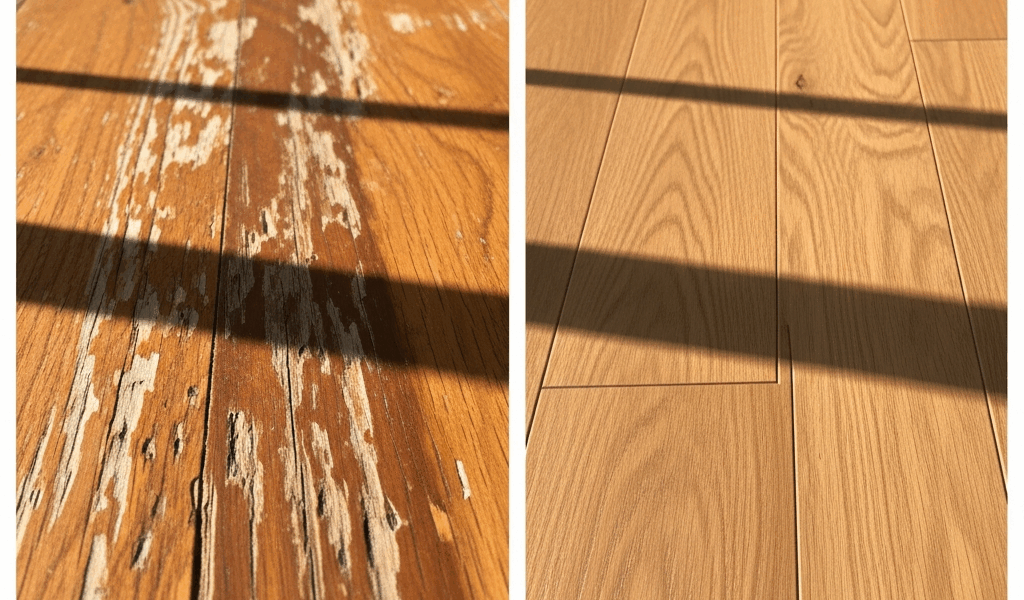
The hardwood vs engineered wood floors debate has gotten complicated with all the marketing noise flying around. As someone who’s installed, recommended, and occasionally regretted both options across dozens of homes, I learned everything there is to know about this particular argument. Today, I will share it all with you. Fair warning: I put solid white oak in my first house — a 1940s bungalow in coastal Georgia — and watched it cup and gap within eighteen months. Don’t make my mistake. The right floor isn’t about which product sounds more prestigious on a showroom placard. It’s about where you’re putting it, what your subfloor looks like, and whether your house breathes like a sauna or a desert.
What Actually Sets These Two Floors Apart
But what is engineered wood, exactly? In essence, it’s real hardwood — just not all the way through. But it’s much more than that distinction suggests. Solid hardwood is a single milled plank, typically ¾-inch thick, cut from species like red oak, white oak, hickory, or walnut. Same material top to bottom. Engineered wood has a genuine hardwood veneer on top — usually between 1mm and 6mm thick depending on the product tier — bonded over a core of cross-layered plywood or HDF.
A surprising number of buyers walk into showrooms thinking engineered means fake, like luxury vinyl plank or laminate. It doesn’t. That point matters more than people realize.
That cross-layered core is really the whole story here. Wood moves with humidity — expands when moisture rises, contracts when air dries out. A solid plank moves as one unit. That’s why it can buckle, gap, or cup in unstable environments. The layered construction in engineered wood fights that movement. Each layer resists the next. The result is a floor that stays dimensionally stable in conditions that would wreck a solid plank inside of two seasons. That’s what makes engineered wood endearing to us practical-minded floor people.
How Each Floor Holds Up Over Time
Probably should have opened with this section, honestly — because refinishing cycles are where most buyers completely miscalculate long-term value.
Solid hardwood, properly maintained, can last a century. Not marketing copy. Actual houses with original hardwood floors installed in the 1920s and 1930s are still getting refinished and resold today. The reason is thickness. A ¾-inch solid plank can be sanded and refinished roughly eight to ten times before the wood above the tongue-and-groove gets too thin. Each refinishing cycle resets everything — scratches gone, finish fresh, floor looks new. That was true in 1952 and it’s still true now.
Engineered wood lifespan depends almost entirely on veneer thickness. Budget engineered products — the stuff you find for $2.50 to $3.50 per square foot — have a veneer around 1mm to 2mm. You’ll get one refinish out of those, maybe none if the installer gets aggressive with the sander. Mid-range engineered with a 3mm to 4mm veneer handles two to three refinishing cycles without drama. Premium lines from manufacturers like Lauzon or Mirage use 4mm to 6mm veneers and behave nearly like solid wood in terms of longevity.
Scratch resistance is governed more by species hardness and finish quality than by solid vs. engineered construction. Check the Janka scale — Brazilian walnut hits 3680 lbf, red oak sits at 1290 lbf. I’m apparently sensitive to this detail and tracking species hardness works for me while ignoring it never does. Moisture response is where the real difference lives. Solid hardwood will move, period. Humidity swings above 25% annually will cause visible winter gaps and potential summer cupping. Engineered handles those swings without complaint.
Where Each One Works Best in a Home
So, without further ado, let’s dive in — room by room, no hedging.
Basements
Do not install solid hardwood below grade. Full stop. Below-grade spaces, even finished basements with good waterproofing, experience humidity conditions that solid planks simply cannot tolerate. Engineered wood is the right call here — specifically a product with a minimum 3mm veneer and a plywood core rather than HDF. HDF cores can swell permanently if moisture gets underneath. Plywood cores handle occasional moisture intrusion considerably better.
Kitchens
Engineered wins in kitchens. Spills happen. Humidity from cooking and dishwashers fluctuates constantly. Solid hardwood in a kitchen isn’t impossible — plenty of older homes have it — but you’re fighting the environment every single day. An engineered floor with a quality aluminum oxide finish is a better long-term investment here. Go with at least a 3.5mm veneer so you have one refinish cycle in your back pocket when traffic patterns start showing.
Living Rooms and Bedrooms — Above Grade, Stable Climate
This is solid hardwood’s territory. A climate-controlled living room with consistent humidity between 35% and 55% is exactly where solid oak or hickory earns its reputation. The refinishing longevity pays off over thirty or forty years of ownership. If you’re in Minnesota or Colorado where indoor air gets brutally dry in winter, run a humidifier and check your HVAC before committing to solid planks.
High-Humidity Regions
Gulf Coast, Florida, Pacific Northwest — anywhere that sees sustained indoor humidity above 60% in summer — engineered wood is the smarter choice throughout the house, not just in wet rooms. I’ve seen solid hardwood floors in coastal South Carolina homes that looked like a relief map of Appalachia after two summers without proper HVAC control. That image sticks with you.
Radiant Heat Subfloors
Engineered wood only. Radiant heat dries wood from below — creating exactly the conditions that cause solid planks to split and gap along the seams. Most solid hardwood manufacturers void the warranty on radiant heat installations entirely. Engineered handles it without issue, as long as the floor temperature stays under 85°F.
Cost Comparison Beyond the Sticker Price
While you won’t need a spreadsheet with seventeen tabs, you will need a handful of real numbers to make this decision intelligently. Material costs run roughly $4 to $10 per square foot for solid hardwood depending on species, and $3 to $12 per square foot for engineered depending on veneer thickness and core quality. Installed with labor, budget $8 to $14 per square foot for solid and $7 to $13 for engineered. The ranges overlap. Upfront cost alone tells you almost nothing useful.
First, you should think in decades — at least if you plan to stay in the house longer than a market cycle. A solid red oak floor installed at $10 per square foot, refinished three times over forty years at roughly $3 per square foot each time, ends up costing about $19 per square foot total — spread across forty years of use. A budget engineered floor at $7 installed that needs full replacement in fifteen years costs $7 now plus whatever replacement runs in 2039. Likely more. Probably significantly more.
I’m apparently still haunted by a cheap engineered floor I recommended for a client’s rental property in 2017 — Shaw brand, 2mm veneer, floated installation. It lasted nine years of rental abuse before the veneer wore through in the main traffic corridor. Replacement was $11 per square foot installed by that point. The math on going mid-range from the start would have been considerably cleaner. Don’t make my mistake.
Mid-range engineered might be the best option for most homeowners, as this category requires balancing upfront spend against realistic refinishing expectations. That is because the $5 to $7 per square foot range — minimum 3.5mm veneer, plywood core — performs honestly over twenty-plus years with normal care. That’s the sweet spot.
Which Floor Should You Actually Choose
Here’s the verdict, broken down by situation. No hedging.
- Older home with humidity issues or no central air conditioning — Engineered wood, 3mm+ veneer, plywood core. Solid hardwood will move on you, and not in a good way.
- New construction on a concrete slab — Engineered wood. Slabs transmit ground moisture even with vapor barriers in place. Don’t fight it.
- Climate-controlled home above grade, long-term ownership planned — Solid hardwood. The refinishing longevity and resale appeal are worth the premium if the environment actually supports it.
- Budget renovation with kids, pets, and heavy foot traffic — Mid-range engineered with a thick aluminum oxide finish. Spend the money on veneer thickness, not exotic species names on a marketing brochure.
- Rental property or flip — Entry-level engineered or skip wood entirely for LVP. Refinishing cycles don’t benefit a landlord who won’t be around to use them.
Both floors are genuinely good products when matched to the right environment. This new idea — matching floor type to actual conditions rather than aesthetic preference — took off several years ago and eventually evolved into the standard approach that flooring professionals know and swear by today. The only bad floor is the one installed somewhere it was never designed to go.

Leave a Reply