Why Cast Iron Pipes Eventually Fail
Cast iron drain pipe failure has grown more complex with the misinformation flying around. For decades — most of the 20th century, really — cast iron was the undisputed standard for residential drainage. Installers knew it cold. Homeowners trusted it. And honestly, it earned that trust. But cast iron has one fatal weakness baked into its design: it corrodes from the inside out.
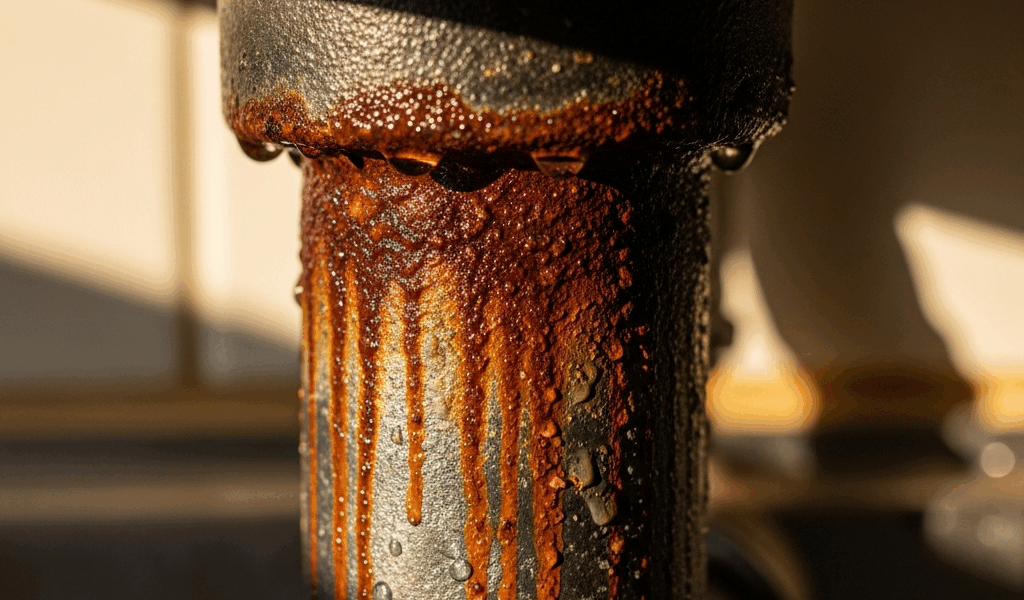
The interior walls live in a brutal environment. Constant moisture, acidic waste, mineral-laden water hitting the same surfaces day after day, decade after decade. Typically somewhere between 50 and 75 years in — depending on your soil conditions and local water chemistry — that interior surface starts losing the battle. Rust scale accumulates. Pinholes open up. The pipe wall thins. What makes this particularly nasty is that the exterior can look completely normal while the inside is quietly falling apart. By the time you spot visible pitting or exterior corrosion on an exposed section, the damage has usually been building for years.
The Warning Signs You Can Spot Yourself
As someone who ignored a faint sewage smell in their basement for three full months, I dug into the practical details of cast iron failure the hard way. Should have acted sooner. Today, I will share it all with you — so you don’t repeat that particular mistake.
Persistent Sewage Smell With No Visible Blockage
Your drain smells like a backed-up sewer but water moves through just fine. That combination is a specific red flag. A failing cast iron pipe loses its seal — small cracks and gaps let sewer gas escape into the living space. You’ll notice it strongest near clean-outs, basement floor drains, or right where the main line exits the foundation wall. This is not a clog. Running a snake through it won’t change anything. What’s actually happening is that the pipe material has deteriorated enough that it no longer contains the system the way it’s supposed to.
Slow Drains in Multiple Fixtures at Once
Kitchen sink sluggish. Bathroom sink sluggish. Shower draining slow. All on the same day. When that pattern shows up, the problem isn’t sitting in individual trap arms — it’s downstream in the main line. With cast iron specifically, this kind of simultaneous slowdown usually points to internal rust scale buildup rather than a conventional clog. The interior diameter of the pipe physically shrinks as corrosion layers accumulate. Less room for water to move. A snake might clear it temporarily, but scale comes back within weeks. That’s the pipe actively corroding and losing capacity — not a one-time blockage situation.
Rust-Colored Water After Running Taps
Turn on a faucet that’s been sitting idle for a few hours and watch what comes out first. Orange or brown water running for 10 to 30 seconds before it clears — that’s rust particles. The source isn’t always obvious. If it’s happening consistently from multiple outlets on the cold water side, you’re likely looking at a supply-side issue. But if you see discoloration only after heavy water use or specifically from drain-adjacent fixtures, that can signal your cast iron waste line shedding interior rust into the flow. The pipe hasn’t failed yet. It’s failing. Schedule a camera inspection — don’t wait for the next stage.
Visible Exterior Corrosion or Pitting on Exposed Pipe Sections
If you’ve got cast iron drainpipe running exposed through a basement or crawl space, grab a flashlight and actually look at it. Run your hand along the surface. Pitting shows up as small divots or holes — like the metal has been eaten away in spots. Heavy orange-red rust with flaking patches is active corrosion, not just surface staining. Exposed pipe in a damp basement deteriorates faster than buried sections, but here’s what matters: visible exterior pitting mirrors what’s happening inside. The rust on the outside surface is telling you exactly what the interior wall looks like — just further along.
Soft or Flaking Pipe Surface When Touched
This one requires actually getting your hands on the pipe. In a basement or crawl space, press the pipe gently with your thumb. A healthy cast iron pipe is hard and completely unyielding — it should feel like pressing on a steel beam. If it gives slightly, feels spongy, or you can flake off rust debris with minimal pressure, the pipe wall has thinned to a dangerous degree. That’s not surface rust. That’s structural compromise. Spare yourself the wrong turn I took of filing it away as “something to watch.” A pipe in that condition can fail under normal pressure or load — call a plumber that week, not eventually.
What a Failing Cast Iron Pipe Sounds Like
Important part first — because sound is frequently the first real hint that something is wrong, and most homeowners never think to listen to their drains. So, without further ado, let’s dive in.
Gurgling drains — that bubbling, percolating noise as water goes down — usually means air is trapped behind a partial blockage. With cast iron systems, that blockage is most often internal rust scale that has built up enough to restrict flow without stopping it completely. Water pushes air ahead of it through the narrowed section. You hear the result. Intermittent gurgling is worth monitoring and writing down. Constant gurgling means the restriction is already significant.
Rumbling or groaning during drainage is caused by pressure changes as water and air move through a narrowed pipe interior. The pipe literally vibrates. In older cast iron systems — anything installed before 1970, roughly — this sound can also mean sections have separated slightly at the joints. That’s a different failure mode, but equally serious.
Knocking or tapping when you flush a toilet or drain a full tub could be loose pipe hangers. But in an aging cast iron system, it often means water hammer combined with structural weakening. I’m apparently sensitive enough to these sounds now that I catch them early — a Ridgid SeeSnake inspection I had done in 2021 confirmed the tapping I’d heard for weeks was a partially separated joint about 14 feet from the clean-out. The pipe wasn’t absorbing shock the way it should have been.
When to Stop Watching and Call a Plumber
One sign? Monitor it. Write down dates and details. Two or more signs showing up together? That’s your threshold for picking up the phone. A strong, constant sewage smell is a professional call on its own — even if every other sign is absent. Don’t wait for a full backup to force the decision.
But what is a camera inspection? In essence, it’s a plumber feeding a small waterproof camera through your clean-out and recording exactly what’s happening inside the line. But it’s much more than that — it’s the only way to get a real diagnosis rather than an educated guess. These inspections typically run $300 to $600 depending on your market and the length of the line. Worth every dollar. You see the actual interior condition on a screen and can make decisions based on real information rather than symptoms alone.
The risk of ignoring multiple signs isn’t abstract. A full pipe collapse means sewage backing into the home, soil contamination, or — in worst cases — a sinkhole opening in the yard above a failed buried line. That was a $27,000 repair for a neighbor of mine in 2019. Learn from what tripped me up, and definitely don’t make his.
Repair or Full Replacement — What to Expect
Once a plumber confirms failure, the path forward depends on what the camera actually showed. A spot repair replaces only the failed section — typically swapping in Schedule 40 PVC or ABS, resloping the line if necessary, and reconnecting to the existing cast iron on both ends. This works cleanly when the failure is isolated and the rest of the system looks solid on inspection. Lower cost, less disruption, faster turnaround.
Full replacement pulls all the old cast iron and installs new plastic piping throughout. More disruptive — expect concrete cutting in a basement scenario — but it eliminates future failure risk in that line entirely. Most plumbers will recommend this route if the pipe is pushing past 60 years old or if the camera footage showed multiple problem areas rather than one isolated section.
Trenchless lining might be the best option, as older cast iron systems often require minimal-disruption solutions. That is because digging up a finished basement or a mature landscaped yard adds enormous cost and recovery time beyond the plumbing work itself. With trenchless lining, an epoxy-saturated sleeve gets pulled through the existing pipe and cured in place — creating a new interior wall without excavation. Not every system is a candidate, though. Pipe geometry, diameter, and existing joint condition all factor in.
While you won’t need an engineering degree to navigate these decisions, you will need a handful of things: camera footage from a licensed plumber, a clear explanation of what that footage shows, and at least two repair quotes before committing. A good plumber walks you through the real options. If someone quotes you full replacement on a first visit without running a camera first — that’s worth a second opinion.



Leave a Reply