Editorial update: The earlier version included an unsourced personal basement story, universal claims about what efflorescence proves, fixed repair prices, cleaning chemicals, and moisture-control prescriptions. This revision treats the deposit as a clue that needs context.
What efflorescence can indicate
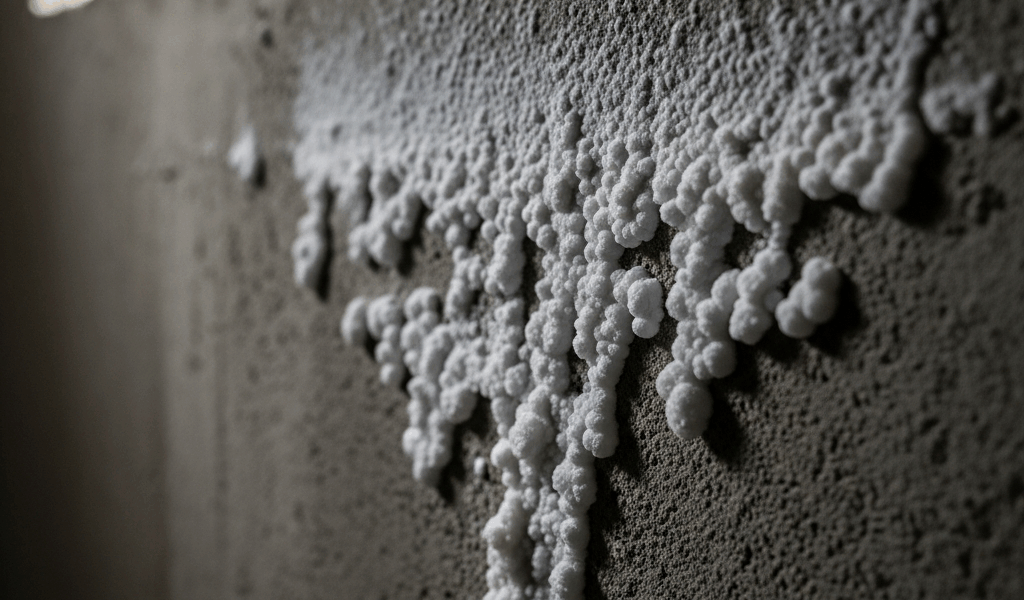
Efflorescence is a whitish salt deposit left when water carrying soluble salts reaches a porous masonry surface and evaporates. It can indicate moisture movement, but the deposit alone does not identify the water source or establish whether a foundation is structurally sound. Moisture may come from rainwater management, a leak, rising damp, or condensation; more than one source can be present.
Record conditions before choosing a repair
- Photograph the area and note when it appears, how it changes, and whether it follows rain, snowmelt, plumbing use, or seasonal humidity.
- Look for visible sources nearby, such as a leaking pipe, roof or gutter problem, water discharged beside the foundation, open joints, or water on the floor. Do not open a wall or excavate to investigate without an appropriate plan.
- Watch for active seepage, recurring dampness, crumbling or flaking masonry, mold growth, or new structural movement. These conditions need assessment beyond surface cleaning.
Avoid masking the moisture problem
Do not apply a waterproof coating or sealant simply because a white deposit is present. The National Park Service cautions that coatings can trap moisture in some masonry assemblies and worsen damage. It also warns against using muriatic acid to remove efflorescence from historic masonry because acid can release additional salts. Material, mortar, paint, and building age matter; consult a qualified masonry or moisture professional before using chemicals, pressure washing, or applying a coating.
When the source is uncertain or the deposit keeps returning, have a qualified building professional identify the moisture path before selecting a repair. Surface appearance alone cannot distinguish a harmless deposit from an ongoing moisture problem.



Leave a Reply