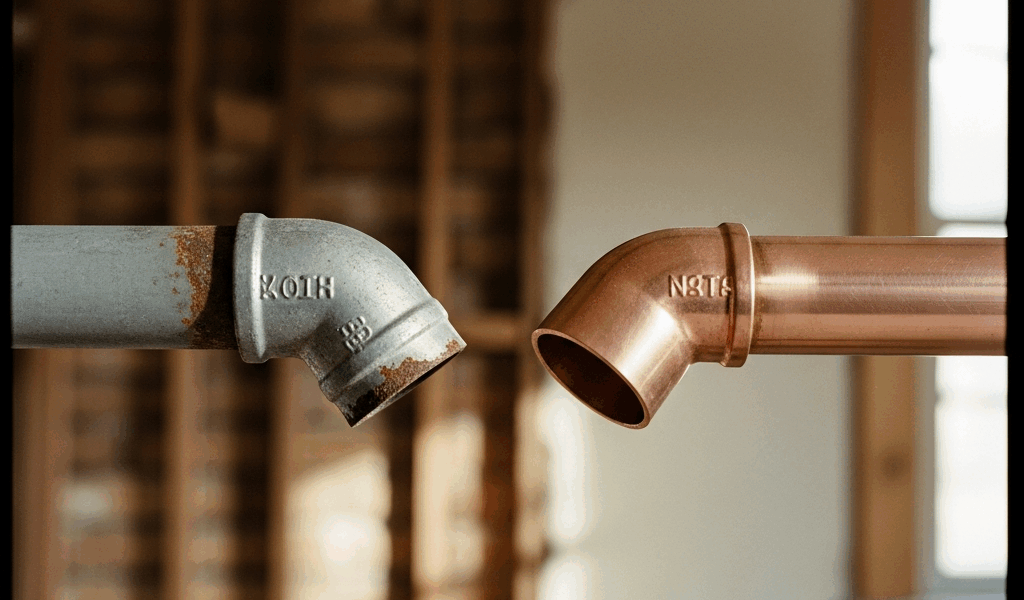
Galvanized steel and copper pipes differ in material, age, installation requirements, and the way a particular plumbing system has been maintained. There is no universal winner. For an older home, identify the exact pipe sections and fittings before planning replacement. Visible corrosion, staining, or low pressure can justify an inspection, but those signs do not establish whether drinking water contains lead or is safe.
This article includes affiliate links. We may earn a commission at no extra cost to you.
Identify the pipe and the part of the system
Galvanized pipe is iron or steel coated with zinc. Copper is a different material, but a home’s water system may also include lead service lines, connectors, solder, fixtures, or other plumbing components. A visible indoor pipe is not necessarily the service line between the water main and the building. Ask the water utility how to check the service-line material and contact a licensed plumber to identify interior piping and fittings.
EPA explains that lead particles can attach to galvanized service lines that are or were downstream of lead service lines. Whether that classification applies to a specific property depends on the water system’s records and the pipe’s history. Do not infer the history from color, age, or a visual check alone.
Separate plumbing condition from water testing
Rust-colored water, deposits, leaks, or changes in pressure are reasons to document what is happening and ask a qualified plumber or utility for help. They cannot confirm or rule out lead. If lead exposure is a concern, follow the water utility’s guidance and use a laboratory certified to test drinking water for lead. EPA recommends following the certified laboratory’s sampling instructions and collecting samples from faucets used for drinking.
Until test results clarify the situation, consult EPA and your utility for current steps to reduce exposure. Boiling does not remove lead from water. Do not rely on a pipe-material comparison or a home test kit to certify water as safe.
Compare replacement options for the actual installation
- Have a licensed plumber map which sections are galvanized, copper, or another material, including fittings and transitions.
- Ask the water utility about service-line records, any known lead or galvanized lines, and local sampling support.
- Request a written scope that identifies pipe materials, accessible and concealed work, permits, wall repairs, shutoff needs, and what water testing is included.
- Confirm that the proposed materials, fittings, and installation method comply with local plumbing code and are suitable for the water conditions and existing system.
- Compare estimates for the same scope. A short visible section does not establish the extent or cost of concealed replacement work.
When to arrange an inspection promptly
Contact a licensed plumber for active leaks, repeated blockage, significant corrosion, or a system that no longer supplies water reliably. Contact the water utility about possible lead service-line concerns and testing. If water quality changes suddenly or a public advisory is issued, follow the utility or public-health instructions for your area.
Primary sources
- EPA: Sources of Lead in Drinking Water describes lead sources, including galvanized service lines that may have been downstream of lead service lines.
- EPA: Protect Your Tap — A Quick Check for Lead explains that each home’s plumbing differs and links to certified drinking-water laboratories.
- EPA: Basic Information About Lead in Drinking Water provides homeowner guidance and service-line information.
Editorial correction, November 25, 2026: Replaced fabricated homeowner experience and unsupported symptom-based water-safety guidance with a source-based pipe-identification and testing guide.




Leave a Reply